

What Surprised Me About Elementary School in Japan
Last Updated on July 17, 2026 by Kay
This post may contain affiliate links, meaning I may earn a small commission on any purchases through those links at zero additional cost to you. Whatever I make goes to keeping this website running and I am forever grateful for the support. See my Privacy Policy for more information.
My kid started elementary school in Japan this year, so I thought I would share things that surprised me as a Canadian.
Keep in mind that I was an elementary school student in Canada many, many years ago, and many things have changed since then. However, I feel like what I’ve noticed at my daughter’s elementary school, at least, might not be so common in other countries.
Surprising Things About Elementary School in Japan
My daughter only started elementary school this year, so this isn’t a full guide to the Japanese school system. These are just the things that surprised me as a parent during the first few months of first grade.
Note that my daughter went to preschool (kindergarten) in Japan for three years, which you can read about here. Preschool helped prepare her for elementary school as she knew how to write basic hiragana, and I was used to having to pack what she needed every day, such as a lunch set and her gym clothes, and her indoor shoes, etc. Preschool also followed the typical Japanese school calendar year and also included early dismissal days.
I feel like hoikuen (which my daughter attended as a baby and toddler) was much easier for me as a parent, as it didn’t demand as much. At the same time, thanks to kindergarten, I knew I had to stay on my toes and check my daughter’s weekly school schedule every morning to make sure I didn’t miss anything.
Now with that out of the way, allow me to share what I found surprising about elementary school in Japan!
Backpacks are Expensive
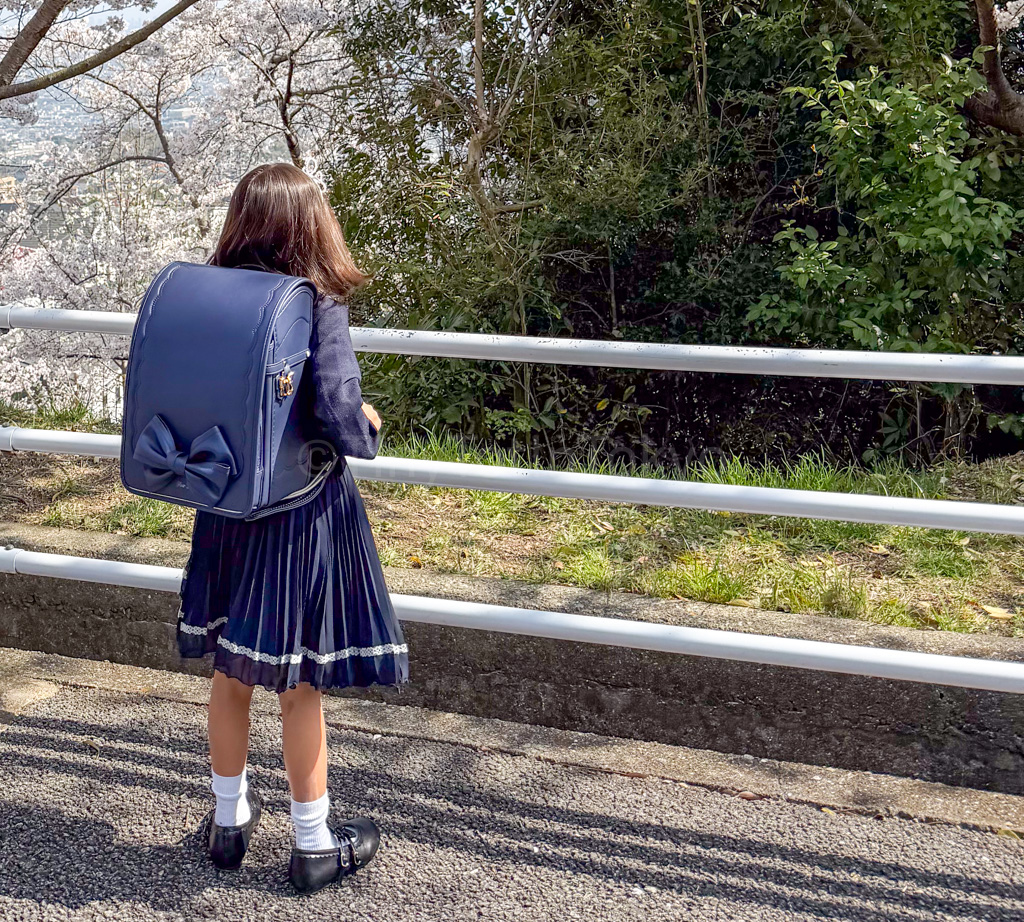
As someone who has lived in Japan for almost twenty years, I was well aware of randoseru, the pricey backpacks (knapsacks, schoolbags, etc) that students use for the entirety of their six years of elementary school. However, that still didn’t stop me from having sticker shock when we went shopping. These bags average around 50,000 yen, and more expensive, designer ones can cost more than 100,000 yen!
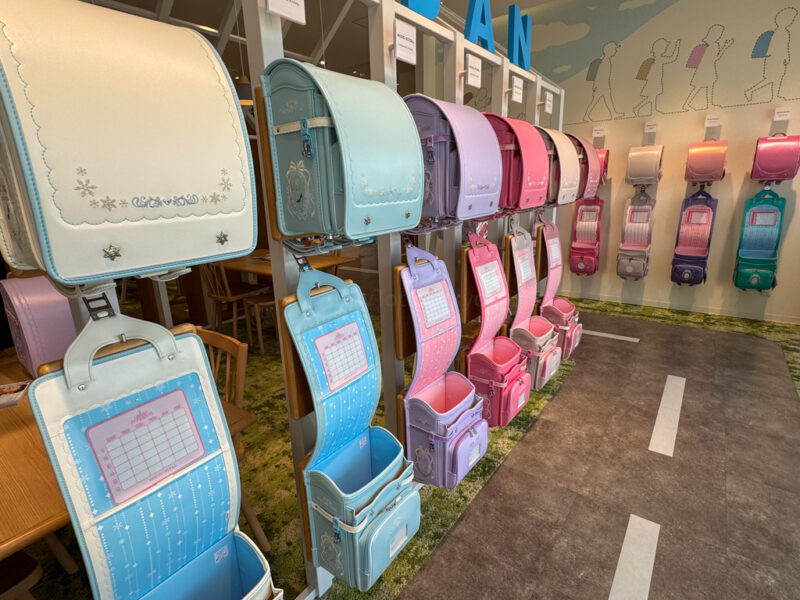
I mean, these bags are durable and good quality, not to mention beautifully designed. There’s a lot of thought put into them so they’re functional, and I like that you can use them for six years and then sell them on the secondhand market or make them into something else your kids can use as a memento. I remember having to buy a new backpack every year when I was a kid in the 90s because each would be destroyed by the end of the school year.
I was very surprised, though, to find out how heavy these are when filled with textbooks. They’re certainly comfortable but heavy, especially when you’re climbing up a flight of stairs. I was also taken aback by how early we needed to order ours, especially since my daughter chose a custom bag. People start looking the year before children start elementary school since it takes time to fulfill orders.
To find out more, read my guide to randoseru in Japan.
Formal Wear is Required for the Entrance Ceremony
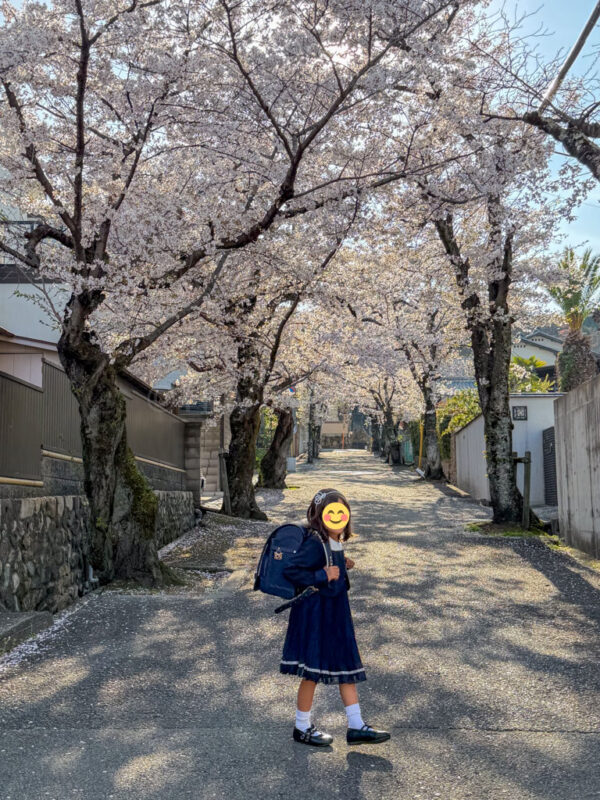
When kids start elementary school, they should be in formal wear for the entrance ceremony (called nyuugakushiki). Boys wear suits while girls wear dresses. The type of dress is quite a specific style and usually has a little jacket that comes with it.
Here is what my daughter’s dress looked like (this dress is from the store anyfam):
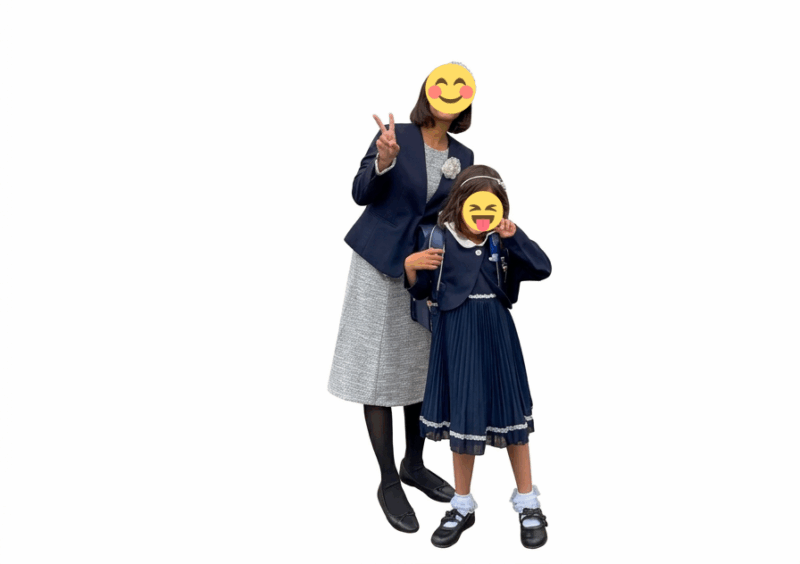
Parents are also required to be in formal wear, fathers in a suit and mothers in a simple dress (think business casual but make sure your shoulders are covered, preferably with a blazer).
Here’s a photo of what I wore:
Make sure not to forget to bring indoor slippers for the whole family!
The School Year Starts in April
In Canada, the school year starts in September, but in Japan, it starts in April. I really find April to be the perfect month since cherry blossom trees are in full bloom during this time. It’s such a beautiful way to start the new academic year.
Notably, the fiscal year also starts in April, so many new university graduates are also starting to work at companies at the same time.
Labeling All the Things
Parents need to put their kids’ names on every single item for school. And I mean every single item, such as pencils, pastels, scissors, erasers… Even every page in a pack of flashcards! (We just used our hanko for that.)
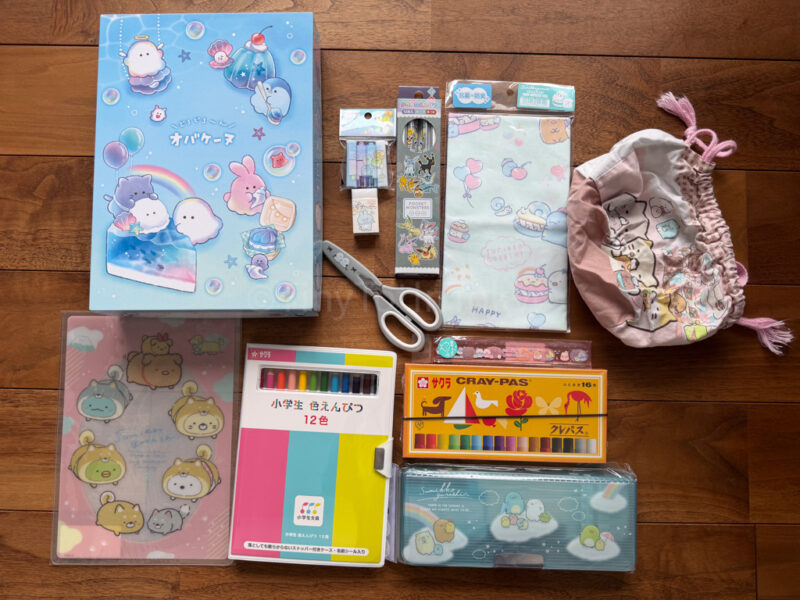
Thankfully, you can order labels online that have your child’s name on them, so all you need to do is peel and stick! I don’t know if this existed when my husband was an elementary school student in the 90s because I found his old pastels with his name handwritten on each one. And his mom had to do this twice since he has a twin!
Indoor Shoes are a Must
Children wear indoor shoes in elementary school. This means the moment they arrive at school, they leave their outdoor shoes in their cubby and then switch to their white, indoor shoes.
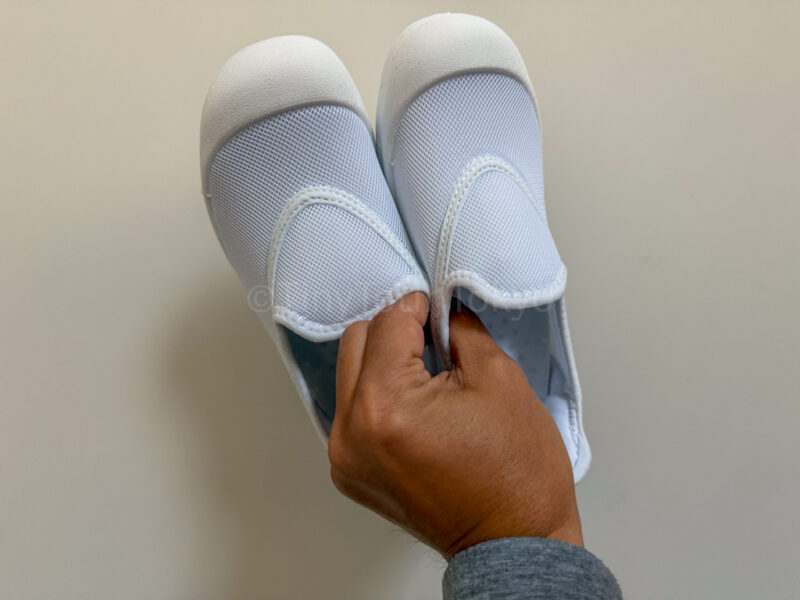
My daughter had indoor shoes at her kindergarten in Japan, so this wasn’t very surprising for me, but I can imagine it might be for foreign parents who have kids entering the Japanese school system for the first time.
Children Need to Sort Out Their Textbooks Every Day
I really don’t remember needing to take textbooks to school in Grade 1. Did my mother handle it?
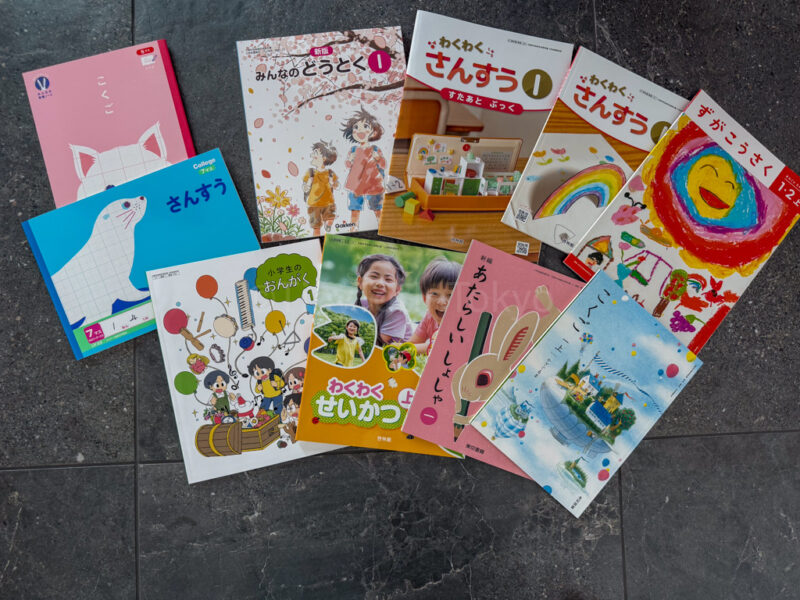
Here in Japan, we need to check the weekly school schedule and put the correct textbooks inside our daughter’s randoseru every day. It’s a bit of a pain, especially because sometimes we don’t know if our kid forgot a textbook at school or not.
Thankfully, the textbooks are thin and light, but I still find it a little overwhelming for both parent and child!
All the Paperwork
Japan loves paperwork. Although some schools have perhaps moved to providing parents with information digitally, I think many are still stuck in the analog age.
I mean, I don’t mind because my eyes are starting to hurt from looking at screens all the time (I think I need a new profession working in nature). But I think it can come as a shock to parents who aren’t expecting to have to read a few pages of documents almost every day. Usually these consist of what the kids did at school or safety precautions (such as in summer heat), but sometimes you need to sign permission slips such as for pools, or there’s a notification to pack something.
So make sure you check your child’s backpack every day!
Children Have Homework from Grade One
I don’t remember having homework when I was in Grade 1. Sometimes I needed to read a book, but that’s about it.
My daughter, however, has homework every day. It’s usually only a page of basic math or Japanese, so it’s not bad at all. But giving kids homework right off the bat is so surprising to me. (Although I have heard that some schools in North America do give students homework from Grade 1, although they’re trying to roll this back now.)
My daughter started going to Kumon the year before, so it’s nothing she can’t handle (she finishes in about ten minutes), but I feel like homework might be a little overwhelming at first for kids who haven’t had any exposure to worksheets etc., before they start school.
Children Walk to and from School in Groups
Depending on where you live, children will walk with their schoolmates to the elementary school. There’s a group called tokohan (登校班) where a leader, usually a sixth-grade child, will take the younger kids in the neighborhood to school. All students need to meet up at the same spot at around the same time every morning and once everyone is accounted for, off they go. My neighborhood has a lot of kids, so there are several tokohan groups that all meet at the same spot.
Grade 1 students are usually accompanied by their parents to the meet-up spot, but by the time they’re in Grade 2, they go by themselves.
Similarly, the kids walk home in the same groups, and parents sometimes meet them at the meet-up spot, or they just continue to walk home with their friends or alone.
When I was a kid, I walked to school by myself. In the snow. Uphill both ways (okay, that last one is a lie; there were no hills, but my daughter has a huge one to climb on the way home, so I feel bad for her). I really don’t think parents in Canada accompanied their kids to school back then (90s), although it might be different now.
Lunches are Planned by a Nutritionist and Cooked In-House
Meals at elementary schools are incredibly healthy as they’re planned by a nutritionist, similar to kindergartens here, and are cooked in the school.
The meals are also delicious, according to my daughter, and feature cuisine from countries around the world. Just the other day she had butter chicken and naan, and then insisted I go to the store and buy naan for dinner that very day! She’s had naan before but I guess there was something very special about the naan she got at school. My daughter has never, ever complained about her lunches at her elementary school.
Children also take turns serving meals to their classmates and cleaning up afterward. This is called kyuushoku touban (給食当番), and kids get a cute little smock, or apron, and hat to wear while they do this.
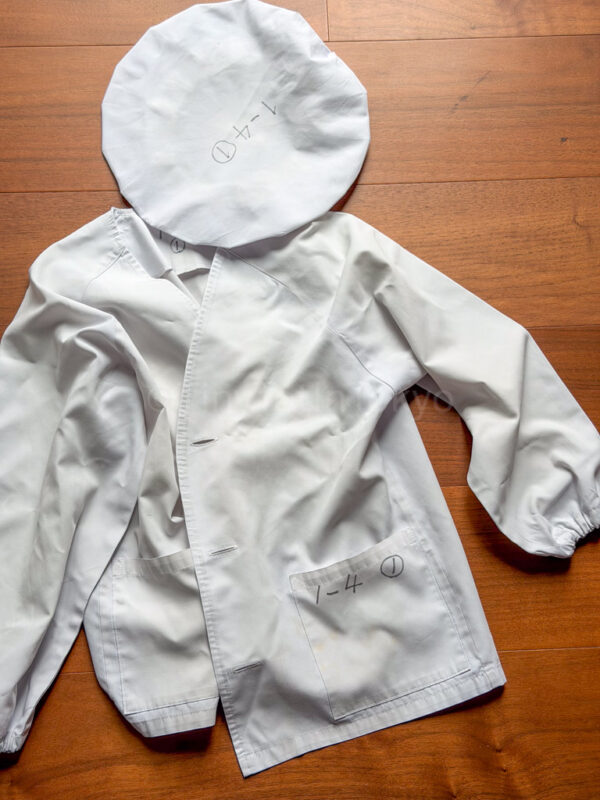
Kids then bring the smock and apron home, and parents are responsible for washing it.
Kids are Responsible for Cleaning
I remember this being something that really surprised me when I first moved to Japan as a high school English teacher. Students have to clean the school at the end of the day, which includes washing windows and floors.
At the time I thought this was a little cruel and borderline abusive, but now I know this teaches them to keep their surroundings clean since they’re responsible for any mess they make. And you can see how this continues to be ingrained in the behavior of Japanese people when they’re adults. Although Japan is not immune to littering, it’s considerably cleaner than some other countries.
Kids Learn Swimming
As a Canadian, I was so impressed to discover that children learn how to swim at elementary school from Grade 1.
They have their own swim costumes and everything, although at least for my daughter’s school, we had to hand-sew her nametag onto it.
Children also learn how to swim wearing their regular clothes and shoes in order to prevent drowning in case they accidentally fall into a body of water.
Summer Vacation is Short
Summer vacation in Japan only lasts for about 1.5 months, while in Canada kids have over two months off!
This always makes me feel bad for my daughter because I wish she could have more time off from school. At the same time, summer has become so hot and unbearable lately that she’s indoors anyway. I wish they would make winter vacation longer instead! (Or perhaps give kids an autumn vacation, since there isn’t one right now.)