
Is Kagoshima Worth Visiting? An Honest Guide + Our Itinerary

Last Updated on May 15, 2026 by Kay
This post may contain affiliate links, meaning I may earn a small commission on any purchases through those links at zero additional cost to you. Whatever I make goes to keeping this website running and I am forever grateful for the support. See my Privacy Policy for more information.
Despite having lived in Japan for almost two decades, I had never had a particular desire to visit Kagoshima. And my husband (a Japanese national) only had bad memories of motorcycling in the rain with his friends through Kyushu’s volcanic prefecture back when he was in university.
But on a whim, we decided to book a trip to Kagoshima, and we’re both so glad that we did.
We didn’t have any expectations (perhaps this was key, especially since we don’t use social media). And while we had some idea about where we wanted to go and what to do, there were lots of “in the spur of the moment” decisions that actually turned out to be pretty amazing.
In this article, I’ll share my honest experience visiting Kagoshima, which includes our highlights and our mistakes. I hope that by the end of the article, you can decide whether you want to visit, no matter what kind of traveler you are.
Table of Contents
Is Kagoshima Worth Visiting?
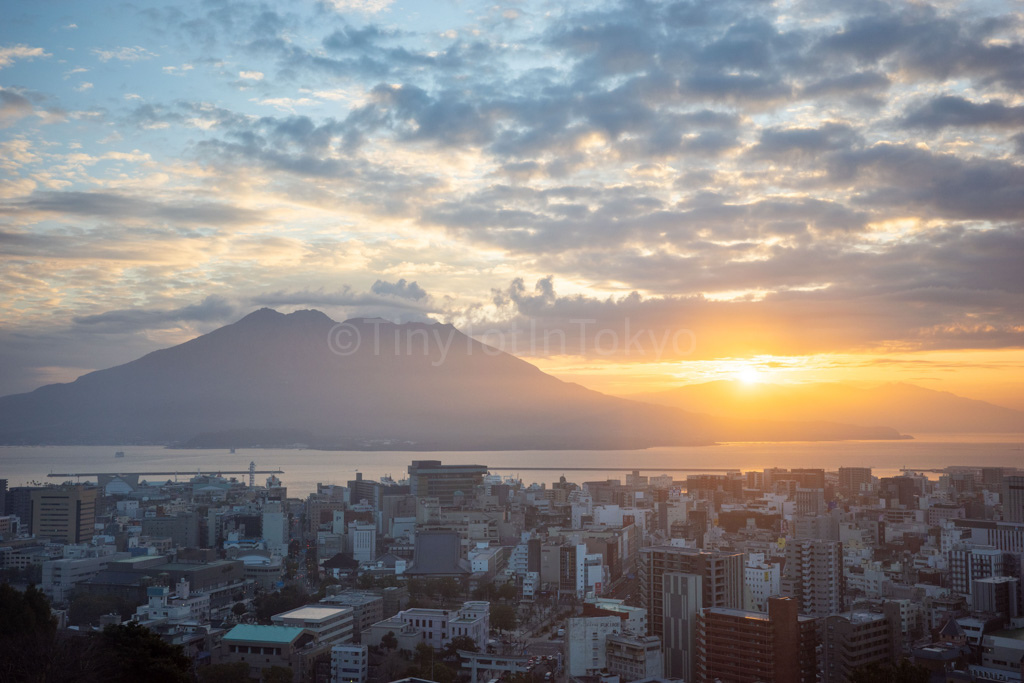
Let’s cut straight to the chase (especially if you’re limited on time). If you’re wondering whether Kagoshima is worth visiting, I would say absolutely yes. There is so much to do, not only in Kagoshima city but also in the prefecture itself.
If you’re tired of big cities and want unique experiences you won’t find anywhere else in Japan, Kagoshima is absolutely for you.
Best of all? There are hardly any tourists here (for now), so it truly feels like a hidden gem.
What Is Kagoshima Famous For?
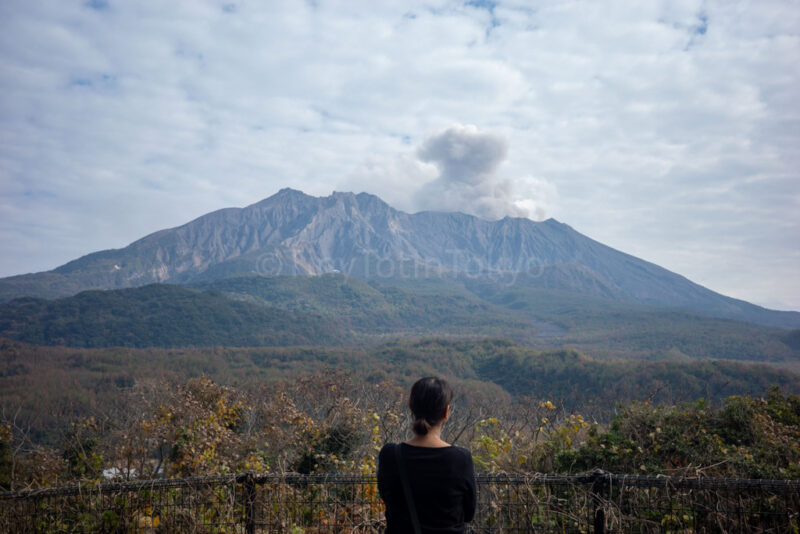
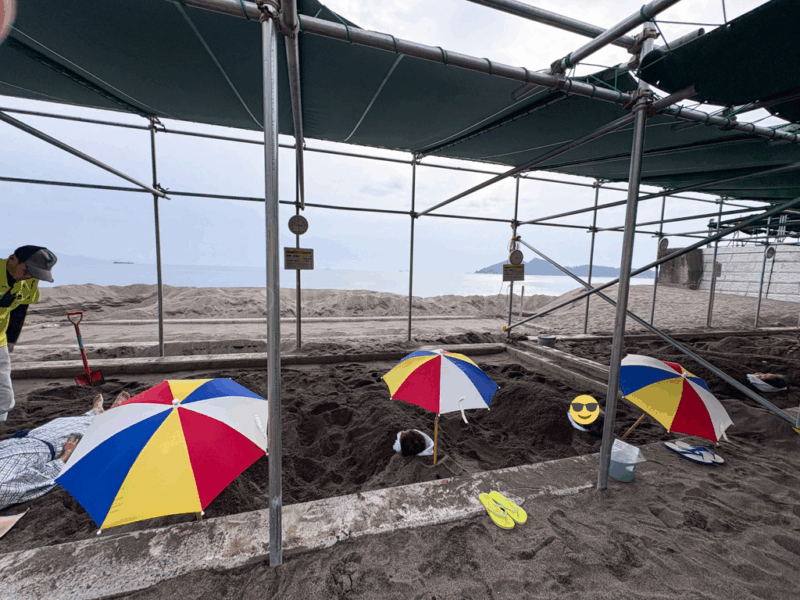
Kagoshima is known for its black pork (Kagoshima kurobuta, かごしま黒豚), scenic nature, and volcanoes. In fact, there are a whopping 23 volcanoes in Kagoshima, the most famous (and most active) being Sakurajima. The abundance of volcanoes means you’ll find lots of onsen, including sand baths!
How Many Days Do You Need in Kagoshima?
We spent three days in Kagoshima, and although we did plenty, I felt like I could have easily spent four days or more here. We also rented a car for our trip, which made exploring the prefecture much easier. If you don’t have a car, make sure to factor in travel time when using public transportation in Kagoshima (which isn’t nearly as convenient as in big cities such as Tokyo or Osaka).
Can you do Kagoshima as a day trip? I think so, especially if you stick to Kagoshima city, but you’ll be rushed and might miss some of the most unique parts of the prefecture.
How to Get to Kagoshima
Located on the tip of Kyushu, Kagoshima is best reached by plane.
You can take the train as well, which might be a better option depending on where you’re traveling from. For example, if you’re journeying from Shin-Osaka Station, it takes about 4.5 hours by Shinkansen and train, and you can use the JR Pass as long as you stick to JR lines.
Our Kagoshima Itinerary:
What We Did and Our Honest Thoughts
Day 1
We took a plane from Osaka Itami Airport and arrived in Kagoshima International Airport bright and early at 8:30 AM. Since we rented a car in advance, the rental company picked us up and took us to their office so that we could fill out the paperwork and get our car. Everything was so fast and by 9 AM we were on the road.
Since we were starving, we decided to grab a quick snack at a Lawson. I highly recommend doing this while you’re in Kagoshima because you can try convenience store food that’s unique to the area.
We tried Kyushu Motsu Nabe Karaage-kun (fried chicken) and Chicken Namban (fried chicken with tartar sauce on rice), which really hit the spot:

Seeing Wildlife at Hirakawa Zoo
Since we were traveling with our six-year-old kiddo, we decided to first go to Hirakawa Zoo. After all, if we didn’t appease her right away, we would hear complaining for the rest of the day.

This zoo is famous for koalas (the koala demonstration was really informative), and it has plenty of other wildlife to see. Is it old? Yes, absolutely. It has lots of retro elements to it that I enjoyed.

There’s also a footbath (ashiyu), as well as one for your hands (手湯), that you can try after you enter the zoo, so make sure to bring a small towel with you.


There was a mix of spacious enclosures, such as for giraffes and lemurs, and then ones that I thought were too small, such as for penguins. The white tiger was pacing around a lot and seemed stressed, too.


However, I did enjoy their Koala House. Once a day at 11 AM, the zookeeper brings out a koala and lets visitors see him up close while sharing educational information. It’s a nice learning experience! The koala seemed really calm, which wasn’t a surprise since the zookeeper was so gentle and patient with him.

There’s a petting zoo at Hirakawa Zoo, too, but you have to be early to get tokens for it, and you can only pet the animals for ten minutes. The picture below, taken at noon, shows that tokens for the 1:30 PM to 2:10 PM timeslots were all gone.

I did see groups of young adults who didn’t have kids at the zoo, but if I didn’t have a kid, I wouldn’t have gone. I don’t like the concept of zoos (in my opinion, a prison for animals), so I suggest skipping this if you feel the same way. If you like zoos (and I absolutely don’t judge anyone who does, I mean, my kid and mom love them), you’ll probably enjoy Hirakawa Zoo.
The souvenir shop at the zoo has a raffle where you can try to win a large stuffed animal. We got the smallest one but it was fine because it was a rainbow koala!

The zoo is connected to a small amusement park, which is very kid-oriented. So again, if you don’t have kiddos, perhaps skip this, too. Although I think the Ferris wheel is worth riding on, since you can have a bird’s-eye view of the area. (I believe it costs about 500 or 600 yen per person.)

Kagoshima was quite cloudy on the first day of our trip, so the scenery wasn’t as stunning as I had hoped. We could see Sakurajima in the distance, though — it’s impossible to miss!
In total, we spent 3.5 hours at Hirakawa Zoo.
Enjoying the View at Lake Ikeda
After the zoo, we drove to Lake Ikeda and arrived at around 2 PM.
Lake Ikeda is a caldera crater that was formed after a volcanic eruption almost 6000 years ago. It’s the biggest lake in Kyushu and the fourth deepest in Japan.

Notably, the lake is home to giant mottled eels that grow as long as 1.8 metres, so if you keep your eyes open, you might be able to see them. At Lake Ikeda, you’ll also find Issie-kun, a cute statue based on “Issie,” a mysterious lake monster said to live in the lake. Think of it as Kagoshima’s version of Nessie, which is probably where it got its name!

It was fun to take photos with the Issie-kun statues but since it wasn’t sunny, the view from Lake Ikeda was fairly “meh”.
A short walk away, we found a lovely field of canola flowers with Mount Kaimon in the background. Mount Kaimon is nicknamed “Satsuma Fuji” because it looks a little like Mount Fuji.

There was also a coffee shop here called danken coffee that’s super popular. We decided to line up for coffee and a sandwich and boy, that was a mistake. The food took 30 minutes (!) to arrive, and both the sandwich and coffee were not worth the wait. So I suggest skipping this place.


My daughter did enjoy the little play area and viewpoint above the coffee shop, though.

We didn’t like the coffee shop, but don’t skip this food truck selling fruit sandwiches in the parking lot outside if you see it. I don’t even like fruit sandwiches but these were heavenly! The strawberries were sweet and juicy, the cream wasn’t overly sweet, and the bread was just the right texture. 10/10!


We spent an hour at Lake Ikeda, but it would have been only 20 minutes had we not ordered food from the coffee shop.
Relaxing in a Sand Bath

In the spur of the moment decision, we traveled down to Ibusuki to try their famous sand baths. My husband had tried this once before when he was young but it was raining, and he didn’t have a good experience. However, I wanted to see for myself what it would be like.
Listen, this ended up being the best part of our first day in Kagoshima. I wish we had gone here earlier instead of stopping at Lake Ikeda for an hour (and yes, getting food at the cafe at Lake Ikeda was a huge mistake).
I’ve written about our experience at the sand bath, so make sure to give it a read to find out where exactly we went (because not all of them let you take photos) and what to expect!
Kurobuta Black Pork Dinner in Kagoshima
For dinner, my husband had booked a restaurant in Kagoshima called Ichiniisan Honten (いちにいさん 本店), which is famous for black pork (kurobuta). Although this restaurant has several locations across Japan, this particular one is the main store.

This dinner was something my husband was really looking forward to, especially since Kagoshima locals seem to love it, so it was a bit of a shame that the food just wasn’t that great.

It was okay, but for the price, we expected better (we live in Japan and eat out often, so we have high standards). The pork tasted a little dry and was not as juicy or flavorful as we had hoped. Thankfully, we did have better Kagoshima black pork later on during our trip.

I recommend skipping this restaurant.
Staying at Shiroyama Hotel

After dinner, we went to our hotel. Shiroyama Hotel Kagoshima is very famous in Kagoshima, and it’s no wonder because the view from Sakurajima is absolutely stunning. The hotel also has a public open-air onsen that overlooks Sakurajima, which was heavenly.
We also loved the breakfast buffet, especially the Kagoshima kurobuta shabu shabu, and ended up regretting that we hadn’t eaten dinner at the hotel too. I do wish there had been a little more for younger kids, but overall, I’d stay here again for the onsen, breakfast, restaurants, and views.
I wrote a full Shiroyama Hotel Kagoshima review if you want further details on the room, onsen, breakfast, and more.
Day 2
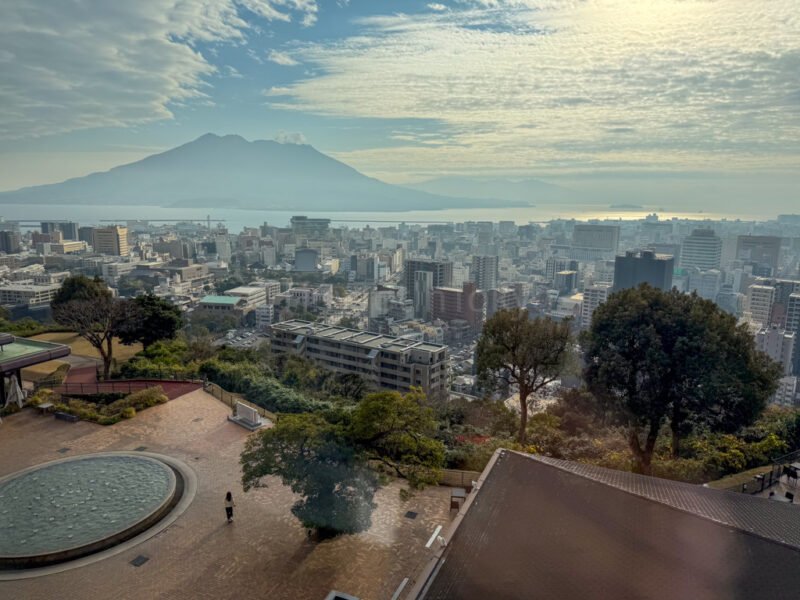
After enjoying breakfast at the hotel and checking out, we decided to see the view from the Shiroyama Park Observation Deck. If you’re staying at the hotel, I don’t think it’s necessary to go here, but since it’s rather close to the hotel, you might as well see it, especially since it takes only 3 minutes on foot from the hotel.

We spent a few minutes looking at the view of Kagoshima city with Sakurajima in the background, which was emitting black plumes, before leaving at 10 AM for the aquarium.
Kagoshima City Aquarium

Despite being old, Kagoshima City Aquarium was surprisingly really nice to visit. It’s connected to the ocean, so at certain times of the day, you can see dolphins released into a canal next to the aquarium. What I especially liked about this is that they don’t force the dolphins to go out if they don’t want to, which is what we experienced.
Sure, we didn’t get to see the dolphins in the canal, but as long as they were being treated with respect, I was fine with it.
We did see the indoor dolphin show, though, which was more focused on educating guests about dolphins than having the dolphins perform (another plus). Although everything is in Japanese, I think guests who don’t understand the language will still be able to understand the gist of it.

The tanks here were also fairly spacious, and the aquarium itself didn’t feel crowded whatsoever. Best of all, they have a whale shark!


There are also touch pools where visitors can get hands-on with sealife.

There is a lovely view of Sakurajima from the top floor of the aquarium, too!

We spent about 1.5 hours at the aquarium and definitely recommend it if you want to see sealife local to Kagoshima.

Also, if you go to Hirakawa Zoo, you can get a discounted ticket for both the zoo and Kagoshima City Aquarium.

Visiting Sakurajima

Another benefit of visiting Kagoshima City Aquarium is that the ferry to Sakurajima is right next to it. And we were able to take our car on the ferry, too! We didn’t prebook as it was a weekday, and we were able to get on a ferry that was departing right away. (Lucky us, since it departs every 20 minutes or so!)
Sakurajima is one of those places that I never expected to love as much as I did. As mentioned earlier, it is the most famous volcano in Kagoshima, perhaps in all of Kyushu, and we ended up spending the entire day there, although we had planned for only half a day. I’ve written an article detailing our visit to Sakurajima, so make sure to give it a read so that you can plan your trip.
Note that Sakurajima is an active volcano (the most active in Japan, in fact), so it’s worth checking the volcanic alert level before visiting. There are five volcanic alert levels. Level 2 usually means areas around the crater are restricted, while Level 3 means entry to the mountain is restricted. Sakurajima is typically at Level 3, which means entry to dangerous mountain areas is restricted, but this does not automatically mean tourists cannot visit Sakurajima by ferry. You still need to avoid restricted zones and pay attention to ash fall, small volcanic stones, and official notices.
Ryokan in Kirishima
After Sakurajima, we drove (that’s right, we didn’t take the ferry, we drove) straight to our ryokan in Kirishima.
Listen, if there is any ryokan you stay at while traveling in Kagoshima, it should be Meisui, especially if you like onsen baths. I wrote a dedicated article about Meisui because it was just that good.

Yes, it was a tad pricey, but it was honestly probably one of the best ryokans I have ever stayed at in my two decades of living in Japan, especially for the price since our room came with three private onsen, one indoor and two open-air!
Day 3
Kirishima Shrine
On our third day in Kagoshima, we checked out of our ryokan and headed to Kirishima Shrine, which is the most famous shrine in Kagoshima. Located in an ancient forest, this shrine is impressive but visitors typically can only see it from the outside. That didn’t bother us, though, because the outer decor of the shrine was so stunning, especially when framed by the dark green trees.


Notably, there’s a cedar tree here that has stood for 800 years, and it’s believed you can obtain some spiritual power from it if you touch it.


I made sure to get two goshuin from Kirishima Shrine, a colorful limited one and another that has a fine outline of Sakurajima on it.

The area the shrine is located in has a few cute shops and restaurants, but most were closed on the day we visited. It was a little disappointing, especially since I wanted to visit the Tengu Museum but I figured that left us with extra time to sightsee.
We spent one hour at Kirishima Shrine.
Takachihogawara
After paying our respects to the Shinto gods, we drove to Takachihogawara. I wanted to see the remains of the second Kirishima Shrine, which was destroyed in an eruption dating back to 1235. It was a very short walk away from the parking lot, but my kid wanted to do coloring in the Takachihogawara Visitor Center, so my husband watched her while I went alone.


Once I was at the site, I came across a Japanese religious group doing some sort of prayer here while taking videos (I did wonder if it was a cult), but they left shortly after I arrived.

The view from here is beautiful, and when you look at what remains of the shrine, it really makes you appreciate the power of nature.


I noticed a small tree here, at the site where the shrine’s main hall used to stand. This tree is considered sacred because it stands inside the Himorogi Saijō, a ritual space where the kami (god) is honored.

I dropped a coin into the offering box in front of it and did a quick prayer before heading back.

When I went back to the Visitor Center, an employee told us about some hiking paths that were doable with a six-year-old, so we decided to try a short one out. Here is the route we took, which is highlighted in yellow:

Although the path isn’t very rugged terrain, I would recommend climbing only if you’re wearing sneakers and in decent shape. It was January when we visited but I was still sweating a few minutes into the climb.

In particular, the beginning/end of the trail had uneven paving where stone steps were missing, which made it easy to trip. So be careful!

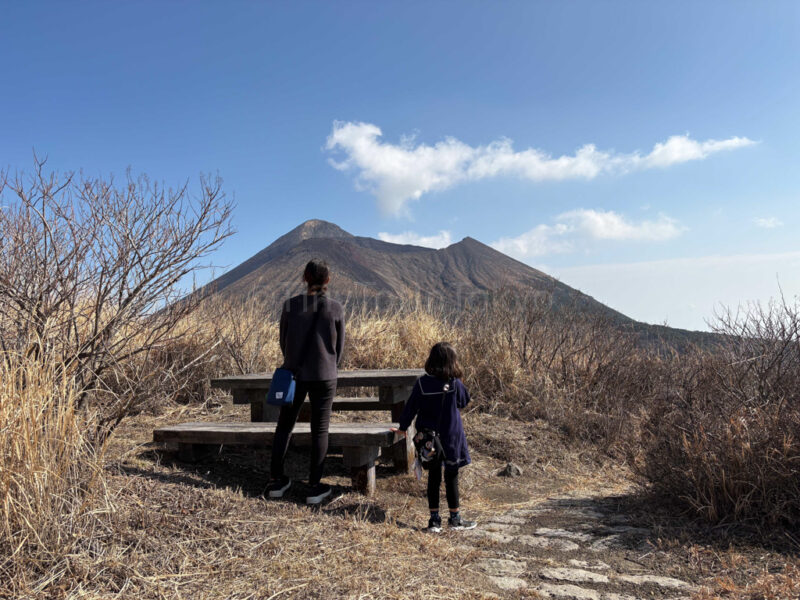
Despite this, it was a really peaceful climb up, especially since there was absolutely no one else on the trail. We took the Azalea Trail Course (つつじコース) and were treated to gorgeous views of Mount Takachihonomine and Sakurajima in the distance while we walked. It was so stunning and so worth it.

We only went halfway up (to the picnic table in the map shown above), stopping at one of several picnic tables to have a snack and relax before heading back. I would have loved to go further if we had time, but we didn’t. In total, it took us one hour there and back.

And best of all, my six-year-old walked the entire time by herself! (This is a huge deal; this child usually has her father carry her halfway, even when we go on a walk around the neighborhood.)

After the hike, we visited the Takachihogawara Park Service Center, where you can use binoculars to see the ruins of the original Kirishima Shrine (it has been rebuilt several times) and learn more about the area.

There are also hiking sticks here that you can borrow for 100 yen, so it might be worth grabbing one before heading out.

They also sell merchandise like pins and stuffed animals that are unique to the park. My daughter bought one of a bird.
Next door, there’s a lovely coffee shop that I highly, highly recommend checking out. Their drip coffee is not only heavenly, but their bread with red bean paste is so, so good. I usually don’t like thick bread but their bread is beyond delicious. And the cream! I don’t like cream either, but I would have eaten this alone with a spoon; it was that good. My daughter got a hot chocolate that had an adorable cream heart on it (also tasted amazing, no surprise).


In total, we spent two hours in Takachihogawara.
If I weren’t with a young child and dressed in more active wear, I would have gladly hiked to Mount Shinmoedake to see the craters, which takes about two hours one-way. This is an active volcano, though, so you might not be able to climb if there is a volcanic alert of 2 or higher. In fact, the old emerald-green crater lake is no longer visible because it was covered by lava after the 2011 eruptions.
Chasing Waterfalls
Here’s where we went off the beaten path. Was it a good decision? Well… yes and no.
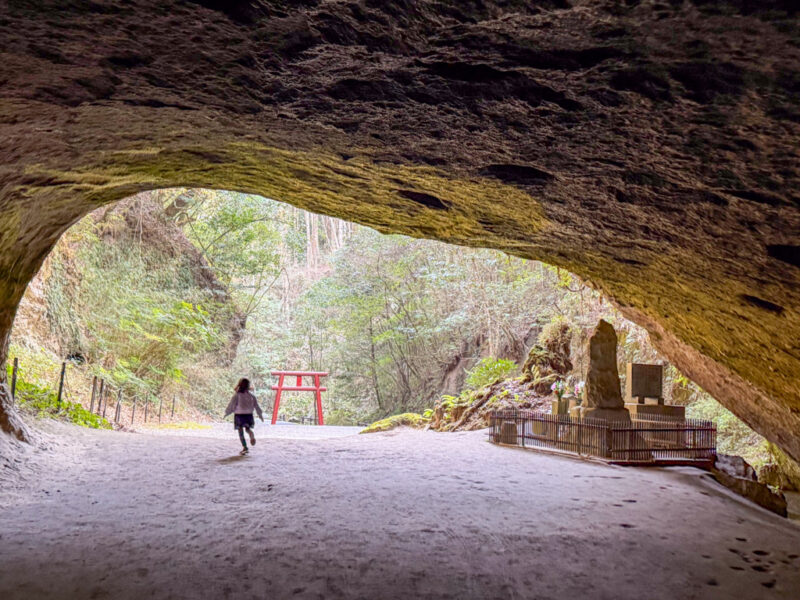
I wanted to take advantage of our car, and since I love spiritual areas, I decided to go to Mizonokuchi Cave, which has a small shrine in front of it and is considered a “power spot”. The pictures on Google Maps made it seem more impressive than it actually is. It’s about a five-minute walk from the parking lot.

The cave is thankfully small, and there are flashlights you can borrow near the entrance to explore the inside.

Mizonokuchi Cave was formed around 29,000 years ago after volcanic ash and pyroclastic-flow deposits hardened into rock. Following this, groundwater slowly eroded the softer layers and created the cave. The ceiling also has holes called “fukinuke pipes”, where volcanic gas or steam once escaped upward. However, when we looked up to see this, our attention was drawn to the dozens of house centipedes on the ceiling, which creeped me out.

Some people consider Mizonokuchi Cave a spiritual place, but for me, it was a little unsettling. I did leave some coins at the small shrine and pray before leaving, though. (And needless to say, my daughter was rather scared, so I don’t recommend bringing kids unless they like exploring dark places.)

We did get some pretty amazing photos at the cave, but I would only suggest coming here if it’s not out of your way, especially since we only spent 15 minutes here while the drive from Takachinogawara took 30 minutes. But, it might be worth stopping by if you go to Sekinoo Falls, which is only 7 minutes by car from Mizonokuchi Cave.
Sekinoo Falls is absolutely stunning! Honestly, it was one of the most impressive waterfalls I’ve ever seen in Japan.


There is also a smaller waterfall on the other side of the bridge and we were able to see a little rainbow at the bottom of it!
Needless to say, my entire family loved this place.
If you’re having trouble finding it (like we did, because the directions via Google Maps were odd when we went), go to the snow peak Cafe. It’s right next door.
Waterfall, Observation Deck, and Playground
Before we had to catch our evening flight back home to Osaka, we decided to make three more stops: another waterfall (yes, yes, I know, my husband was also like “what is wrong with you”), an observation deck, and a playground.
The last waterfall we visited for this trip was Ryumon Falls. This 46-meter-high waterfall is considered one of Japan’s 100 best. It’s located in a very quiet area so don’t expect much apart from the falls, but the waterfall alone was perfect. I spent a few minutes here admiring the waterfall before we left for the observation deck.

(If you have time, you might want to try the nearby Tasumonjizaka Trail, which is commonly used for filming historical dramas in Japan.)
The observation deck, Takakura Viewing Platform, was only a 4-minute drive from Ryumon Falls, and 25-minutes away on foot. From here, you can see all of Kagoshima city, as well as Sakurajima. Like Ryumon Falls, it was very quiet when we visited, as there was hardly anyone else there. We loved watching the beginnings of the sunset from the deck, but didn’t spend too much time here as we had one more stop to make.

Our last stop of the day was Takaoka Park, which was 9 minutes away by car. This is a decent-sized playground with plenty of equipment for children of different ages. My daughter absolutely loved it here and didn’t want to leave! (We sadly don’t have playgrounds like this in our neighborhood.)


There is also an observation deck here as well, so make sure to check it out if you decide to go! The view was very lovely. I honestly think you don’t need to go to Takakura Viewing Platform if you go to Takaoka Park.
Although my daughter wanted to spend more time at the park, we had a flight to catch, so we wrapped it up and headed to the airport.
So, Should You Visit Kagoshima?
Our visit to Kagoshima wasn’t perfect (the first half of the first day was a miss), but overall, our family had an amazing time in Kagoshima. It was such a memorable trip, and now we really want to go back!
If you love nature and quiet, unique experiences, Kagoshima will be a perfect place for you. It can be inconvenient if you don’t have a car, but honestly, I traveled throughout Japan alone using buses and trains back in the day before Google Maps existed, so if I could do it, so can you.